
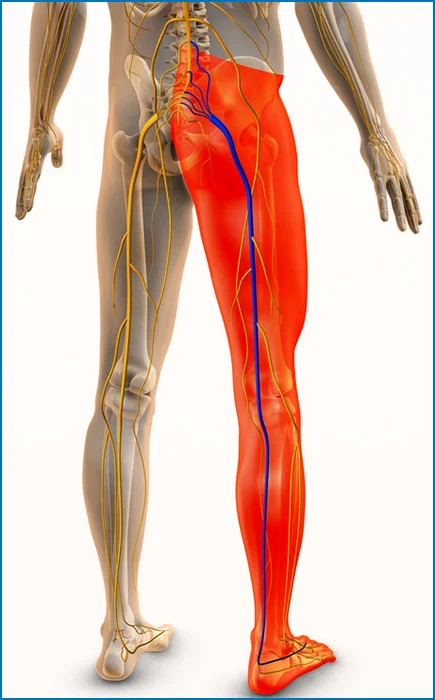

If you've ever felt a sudden jolt of pain starting in your lower back or buttock, traveling down the back of your thigh all the way to your foot — you already know how disruptive that sensation can be.
That path of pain is not random. It follows the exact route of the sciatic nerve — the longest nerve in the human body — which runs from your lumbar spine, through your buttock, down the back of your leg and all the way to your toes.
When this nerve becomes irritated or compressed, the result is what millions of people describe as one of the most intense, unpredictable types of discomfort they have ever experienced.
Common signs of sciatic nerve irritation:
- Sharp, stabbing pain from the lower back or buttock down the back of one leg
- Burning or tingling sensation along the leg, calf or foot
- Electric-shock feeling that worsens when sitting for long periods
- Discomfort that intensifies when sneezing, coughing or bending
- Numbness or weakness in the affected leg or foot
- Pain that is mostly one-sided and tends to improve when lying down
Most people who experience these symptoms have already tried conventional approaches — pain medications, physical therapy, steroid injections — with only temporary or partial relief.
The reason, according to emerging research, is that most treatments address the pain signal — not the underlying nerve irritation that produces it. Without addressing the root cause, the discomfort tends to return.
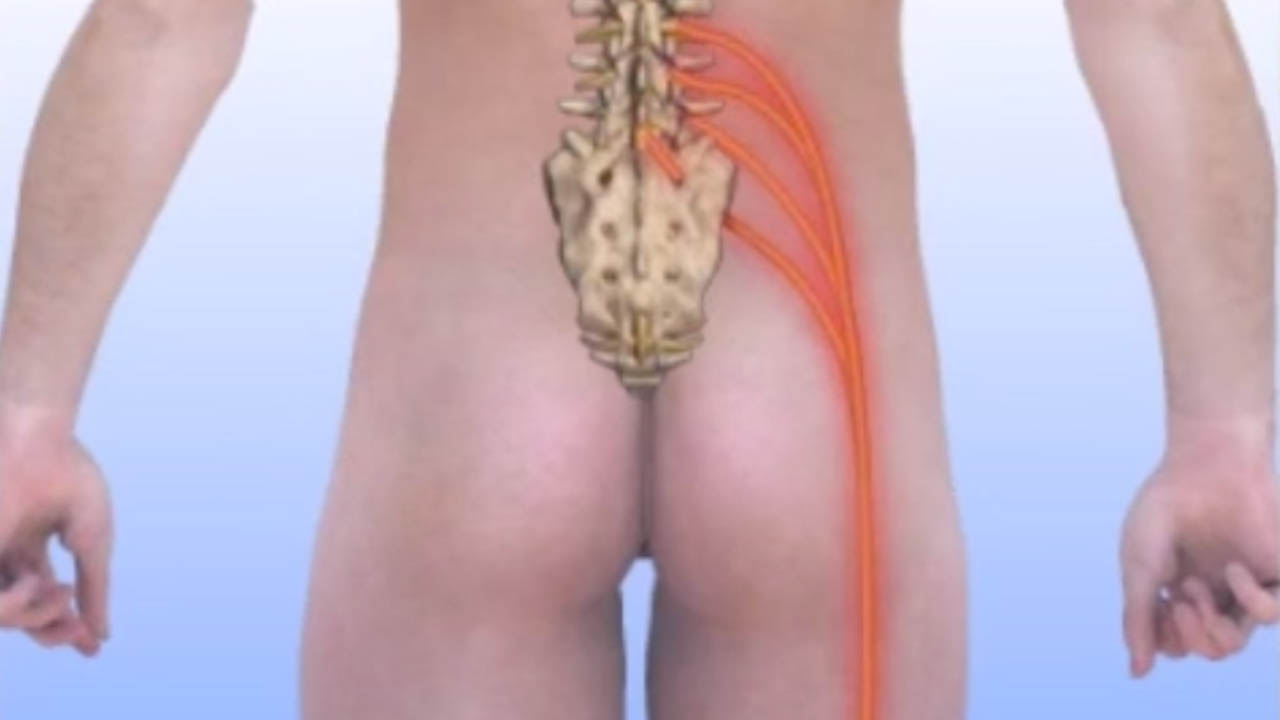
The sciatic nerve — the longest nerve in the body — originates in the lumbar spine and travels through the buttock down the entire length of the leg.
Now, a nerve specialist who spent over two decades working with patients who had already exhausted conventional options has developed a natural protocol that targets the actual source of sciatic nerve discomfort — the inflammatory process happening around the nerve itself.
At the center of this approach is a naturally occurring molecule your body already produces — one that plays a direct role in regulating nerve inflammation. When levels of this molecule are insufficient, the protective sheath surrounding the sciatic nerve becomes increasingly vulnerable.
The full explanation of how this works — including the clinical research behind it — is available in the short presentation below. Thousands of people who had struggled for years with this type of nerve discomfort have already watched it and applied what they learned.
The question is simply: are you ready to see what they discovered?